The highly anticipated interim trade deal between India and the United States is currently on hold, awaiting Washington's finalisation of its internal tariff framework, even as the US has assured New Delhi of a crucial comparative tariff advantage over its global competitors.
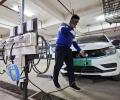
The Indian government has made electric vehicles (EVs) the default choice for staff car procurement across ministries and departments, setting a higher price cap of 20 lakh for EVs compared to 10 lakh for ICE vehicles. Concurrently, new guidelines have been issued for procuring electronic devices, incentivising 'Make in India' products with a higher price ceiling.

India has banned the export of lithium-ion battery black mass with immediate effect to ensure domestic availability of critical minerals and strengthen its battery recycling industry. This move aims to address the underutilisation of domestic recycling capacity due to inadequate feedstock and reduce reliance on imports for essential minerals like lithium, cobalt, nickel, and manganese.

Central Public Sector Enterprises (CPSEs) have achieved nearly 60 per cent of their FY27 annual capital expenditure (capex) target of approximately 8.43 trillion during April-October, broadly aligning with the previous financial year's performance. This significant spending, up 13 per cent year-on-year, is a crucial component of India's investment-led growth strategy.

The Ministries of Skill Development & Entrepreneurship and Corporate Affairs spent only 8 per cent of their FY27 Budget Estimates in the first half of the financial year, making them among the top underspenders, according to data from the Controller General of Accounts.

The Union finance ministry has constituted a high-level committee, chaired by former Central Vigilance Commissioner Suresh N Patel, to recommend structural, regulatory, and legislative reforms for India's banking sector, aiming to make banks globally competitive and support the financing needs of a developed economy.

Chief Economic Advisor V Anantha Nageswaran stated that 2026 marks an inflection point for India, akin to 1991, necessitating the country to become globally indispensable in carefully chosen sectors to build strategic leverage for accessing geopolitically contested resources amidst a series of external shocks.

His remarks come amid a debate over whether Tata Sons, the holding company of India's largest conglomerate Tata group, is required to go public.

'We are open to all countries around the world as long as we get a fair deal, as long as we are ensured continuity in the engagement.'

While India and the US have narrowed their differences, the remaining issues will be the hardest to resolve

'While the population remains relatively young, its age structure is beginning to shift, setting the stage for a much older population later this century.'

'We expect the Indian delegation to flag New Delhi's worries and elaborate on its standpoint on the Russia-linked tariff as well as the Section 301 investigation into overcapacity.'

75% of India's 60 million digital-payment merchants have never recorded a transaction above 2,000.

'It is a blunt and dangerous attempt to pressure India to sign BTA on one-sided terms.'

'I don't really expect the August increase in food prices, which was close to 6 per cent, to persist as we go close to the end of this year.'

India's proposal to link BRICS payment systems, including central-bank digital currencies (CBDCs), was notably absent from the grouping's New Delhi Declaration, despite being a key agenda item for India's chairmanship. This omission leaves the 16-year effort for trade in local currencies without a settled payment architecture, with the declaration only 'acknowledging' the work of the BRICS Payment Task Force.

BRICS members have expressed 'serious concerns' over the unilateral imposition of trade and finance-related measures, including higher tariffs and non-tariff barriers, stating these actions distort trade and are inconsistent with WTO rules. The grouping also highlighted elevated risks to the global economic outlook due to geopolitical tensions, trade fragmentation, and protectionism.
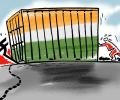
The United States and the European Union have strongly criticised India's trade policies at the World Trade Organization review, highlighting concerns over high tariffs, quality-control orders (QCOs), and restrictions on digital trade and services, which they argue undermine India's economic openness.

The Indian Centre has spent 37 per cent of its ~12.22 trillion capital expenditure target in the first four months of FY27, marking a 30 per cent year-on-year increase, while simultaneously keeping the fiscal deficit under control at 27 per cent of the Budget Estimate.

Finance Minister Nirmala Sitharaman stated that India is likely to sustain economic growth of 7 per cent or more in 2026-27, continuing the pace recorded since the Covid-19 pandemic, despite geopolitical uncertainties and supply-chain disruptions.
